
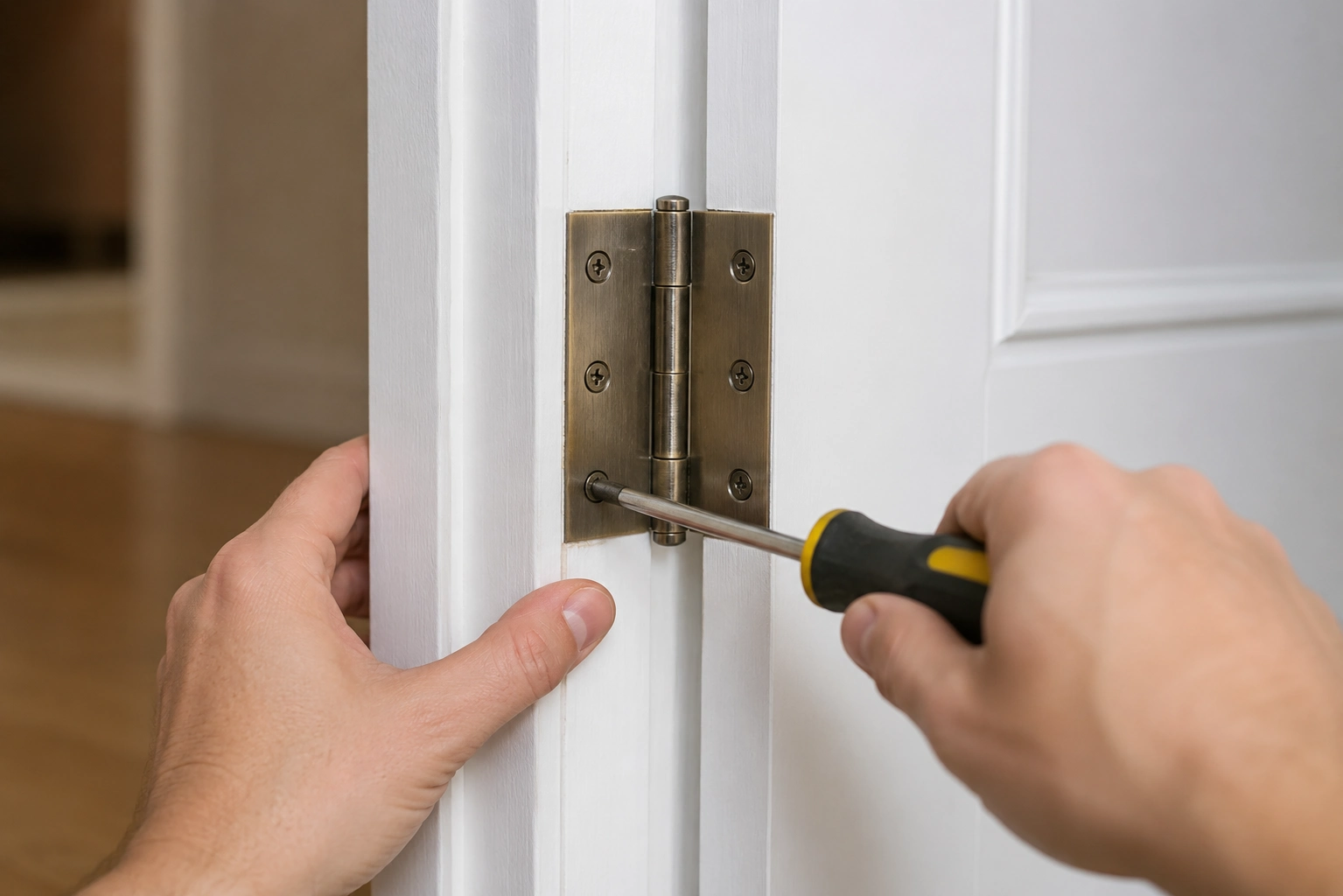
Door hinges rarely get much attention until something goes wrong. They are used hundreds of times a day, carry the full weight of the door every time it opens, and yet most people only think about them when a door starts squeaking, dropping or not closing properly.
This guide explains how to spot the signs that your hinges need attention, what to look for when choosing replacements, and how to fit them yourself.
Signs your door hinges need replacing
The door is dropping or dragging on the floor
If a door that always fitted well starts to catch on the floor or carpet, the hinges are usually the culprit. Over time, the screws holding the hinge to the door frame or door edge can work loose, allowing the door to sag. In some cases the hinge itself has worn and developed play in the knuckle, meaning the door shifts downward slightly when open.
Tighten the hinge screws first. If the screw holes have stripped, pack them with wooden toothpicks and wood glue, allow to dry, then refit. If the hinge has visible wear or wobble at the knuckle, replacement is the better option.
The door squeaks every time it opens
Squeaking is usually caused by lack of lubrication between the hinge pin and the knuckle, or by metal-on-metal friction from wear. Try applying a small amount of petroleum jelly, light oil or dry graphite lubricant to the pin. Work the door back and forth to distribute it.
If the squeak returns quickly or the hinge looks corroded or worn, it is worth replacing it. A worn hinge will continue to cause noise and may also affect how the door sits in the frame.
Visible rust, corrosion or damage
Surface rust on steel hinges is common in bathrooms and kitchens where humidity is higher. Once the protective finish has broken down, corrosion accelerates. Rusty hinges can stain the door frame and, over time, weaken the fixing. If you can see active rust rather than just surface patina, replace sooner rather than later.
The door does not stay in position when open
If a door swings open or shut on its own rather than staying in the position you leave it, the hinges are not the only possible cause (the floor may not be level, or the door itself may be warped) but worn hinges with play in the knuckle can contribute. Try lifting the door slightly by the handle when it is open and seeing if there is noticeable movement. If so, the hinge knuckle has worn.
What to look for when buying replacement hinges
Size
Standard internal door hinges in the UK are 76mm (3 inch) or 89mm (3.5 inch) in length when measured with the leaf folded flat. Measure your existing hinge before buying. The width when open (the full leaf-to-leaf width) is typically 50mm for a 76mm hinge. Most doors use two or three hinges; heavy or fire doors may use three.
Material
Steel hinges are the most common for internal doors. Solid brass hinges are a premium option that suits traditional and period properties and will not rust. Stainless steel offers corrosion resistance at a lower cost than brass and is a good choice for bathrooms and kitchens.
Finish
Get the finish right and the hinges become invisible; get it wrong and they jar against the rest of the door furniture. Match the hinge finish to your door handles and other ironmongery for a consistent look. The most popular choices are polished brass, antique brass, satin nickel, polished chrome and matt black.
How to replace a door hinge
- Open the door to a comfortable working angle and wedge it in position with a doorstop or piece of folded card.
- Unscrew the old hinge from the door edge first, then from the frame. If the screws are stuck, apply a little penetrating oil and wait a few minutes.
- Check the recess (the mortice) cut into the door edge and frame. It should match your new hinge. If the new hinge is thicker, you may need to deepen the mortice slightly with a sharp chisel.
- Offer up the new hinge and mark the screw positions with a pencil if the holes do not align with the existing ones.
- Fit the hinge to the door edge first, then close the door carefully and fix to the frame. Check that the door closes flush and the latch engages before fully tightening all screws.
While you are there
If you are already replacing hinges, it is a good moment to check the rest of the door furniture at the same time. A new set of hinges in a refreshed finish can highlight how tired the handle or escutcheon looks by comparison.
Browse our full range of door handles to find a set that matches your new hinges, or check the cupboard hardware if you are also updating furniture in the same room.